Overview
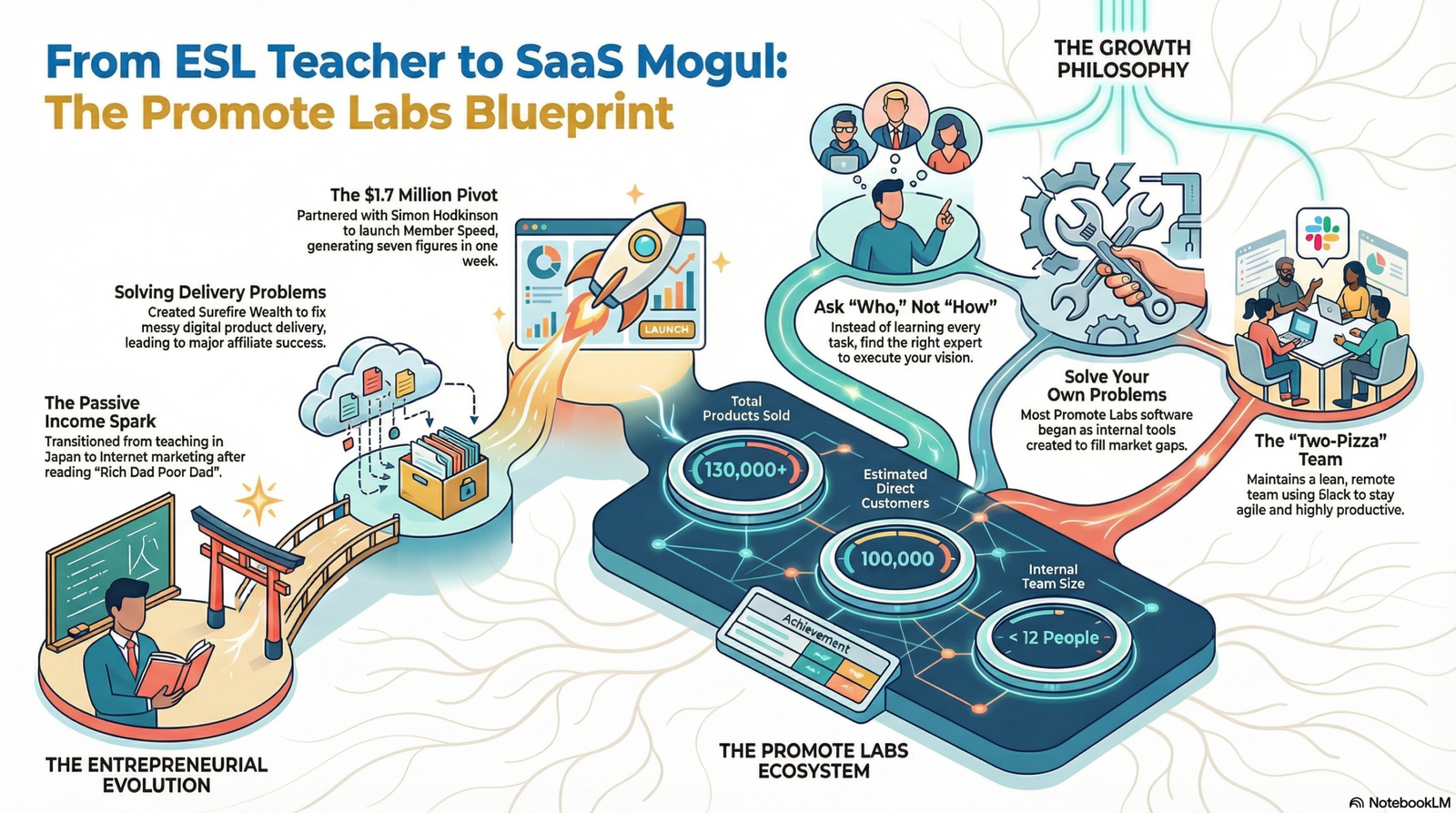
This interview features Jeremy Gislason, the co-founder of Promote Labs, detailing his professional journey from teaching English in Japan to becoming a successful digital entrepreneur. He explains how he and his business partner, Simon Hodkinson, built an expansive ecosystem of software-as-a-service solutions and information products while working entirely remotely. The discussion highlights their collaborative philosophy, which prioritises solving internal problems through software development and leveraging a small, efficient team to maintain high productivity. Gislason emphasises the importance of passive income, building mailing lists, and the shift from “how” to “who” when executing complex projects. Looking toward the future, he expresses a keen interest in Web3 developments, including blockchain and NFTs, as the next stage of their business evolution. Ultimately, the source serves as a guide on achieving professional freedom and scaling a digital brand through strategic partnerships and consistent innovation.
This website contained affiliates links.
Podcast Audio Spotify
Video Transcript
What strategies does Promote Labs use to manage a remote team?
Promote Labs manages its remote team through a combination of streamlined communication, specialized delegation, and a commitment to keeping the team small and agile.
Their key management strategies include:
- Virtual Office and Communication: The company has not used internal email for approximately five years, instead relying on Slack as their “virtual office” for daily updates and conversations. They also use Skype for audio calls, a practice they have maintained since their early days of working together across different continents.
- Small, Agile Teams: Following Jeff Bezos’s “two-pizza team” philosophy, they keep their core team small—fewer than a dozen people—to ensure the business remains manageable and efficient.
- Structured Accountability: Jeremy and his partner, Simon Hodkinson, hold weekly meetings every Monday. During these meetings, they discuss their individual progress, set goals for the coming week, and hold each other accountable for their responsibilities.
- Specialized Roles and Sub-Teams: The team is composed of individuals with specific tasks, such as support staff, writing teams, and an accountant. For complex tasks like software development, they partner with specific “whos” (like FRA for Product Dino or Simon Phillips for other apps) who then manage their own specialized coding teams.
- Clear Division of Strengths: Management is split based on natural talents; Simon focuses on the creative and ideation side, while Jeremy focuses on the execution side of the business.
- Pragmatic Project Management: They avoid “analysis paralysis” by being willing to test ideas quickly and scrap them if they aren’t working, even after significant investment. To maintain team morale, they avoid getting “overly attached” to any single project.
By leveraging these strategies, Jeremy and Simon were able to build a multi-million dollar business and work together for several years before ever meeting in person